Vinsyt / Communications
The Referral Program
One messaging system for eight dealership referral offers
I rebuilt three generations of referral messaging into a configurable system for Vinsyt. The work covers the offer model, conditional copy, channel variants, and the path from invitation to sharing and redemption.
Role
Offer modeling, message architecture, UX writing, share and redemption flows, and event configuration.
The offer model
Model the offer before writing the message
Dealerships can reward the owner, the friend, both, or neither, across sales and service. The copy has to describe that configuration accurately without making a reward appear where none exists.
The configurator makes those choices visible beside their output. I used it to connect the commercial settings to the language a customer would actually receive.
How an offer is built
Two switches sit behind every offer: who is rewarded, and what they have to do to earn it.

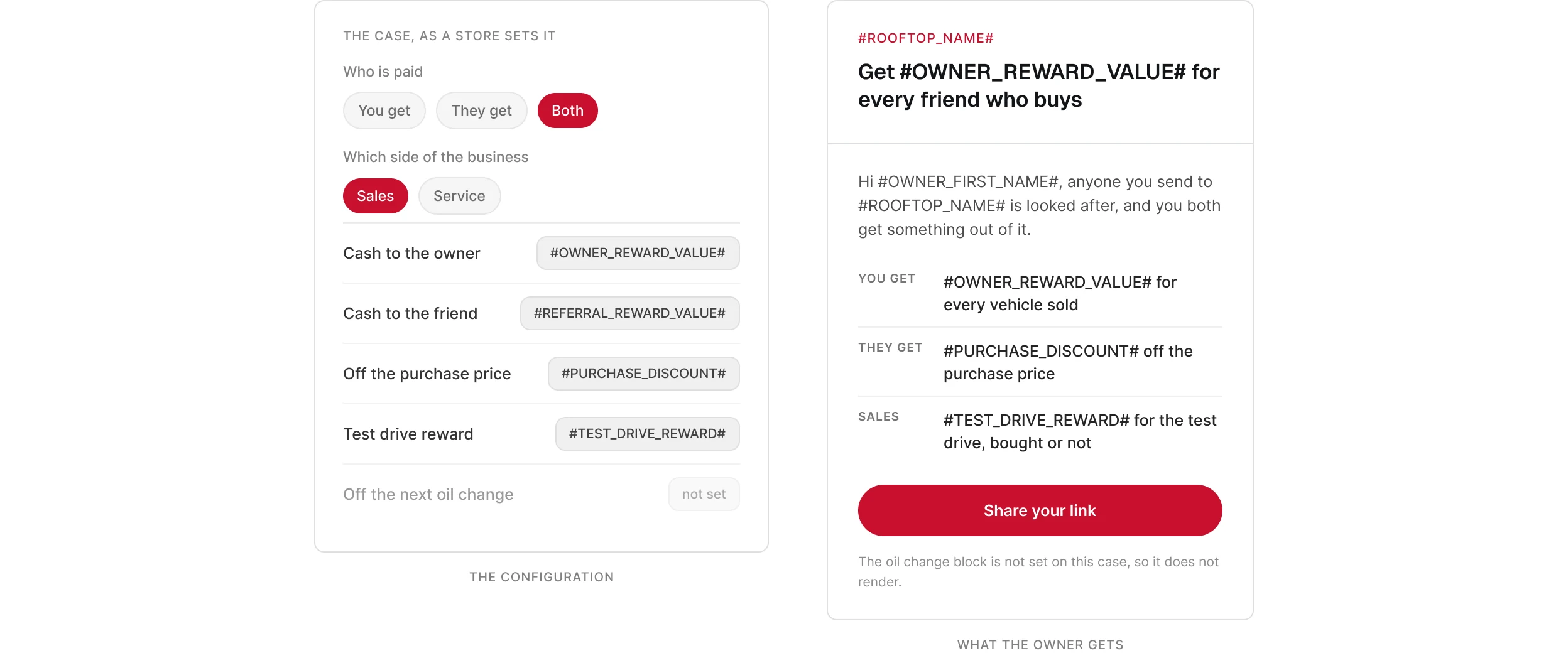
The configurator
The offer configuration determines which rewards the message can describe.
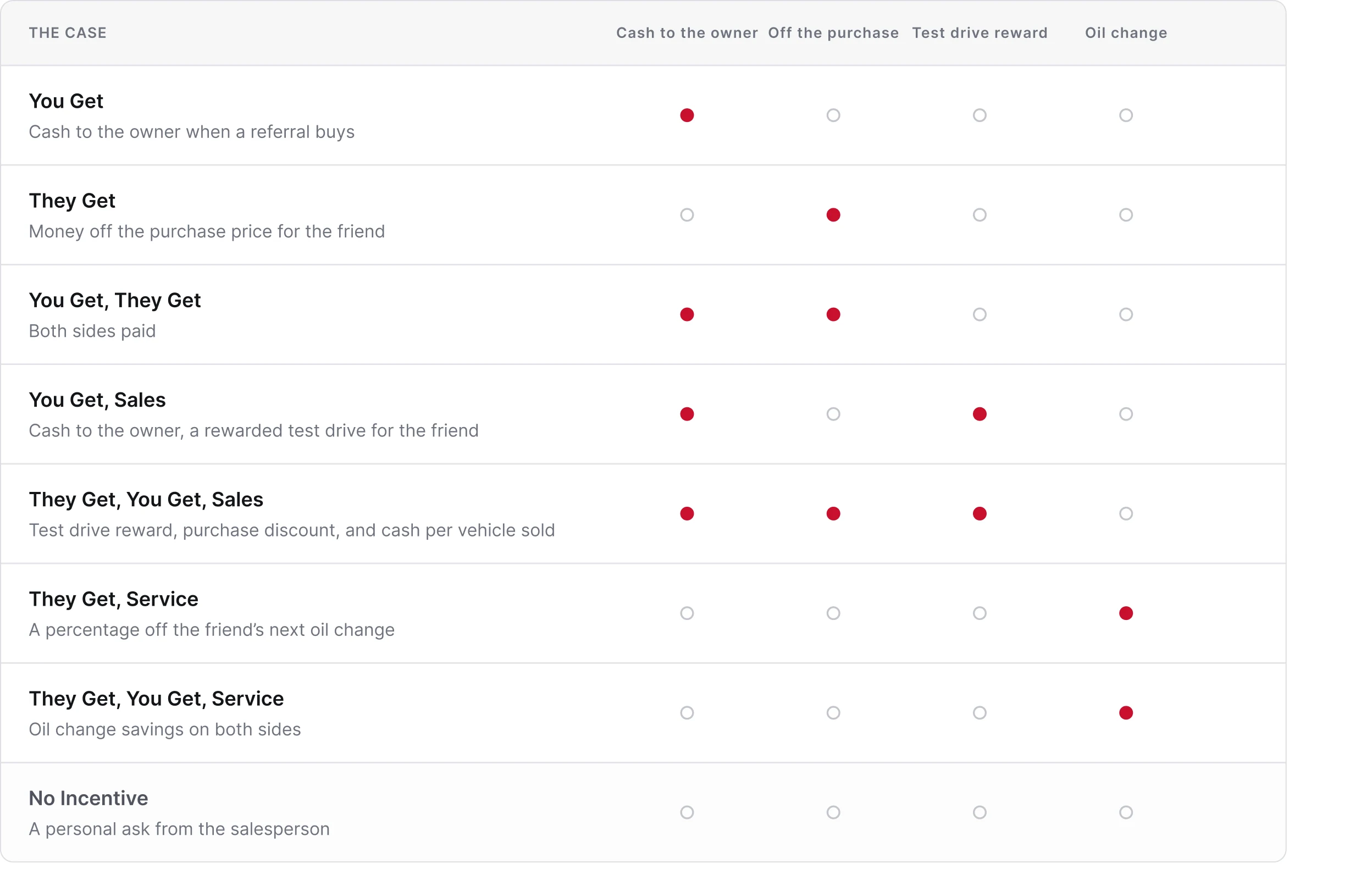
The eight cases
The eight-case reference table.
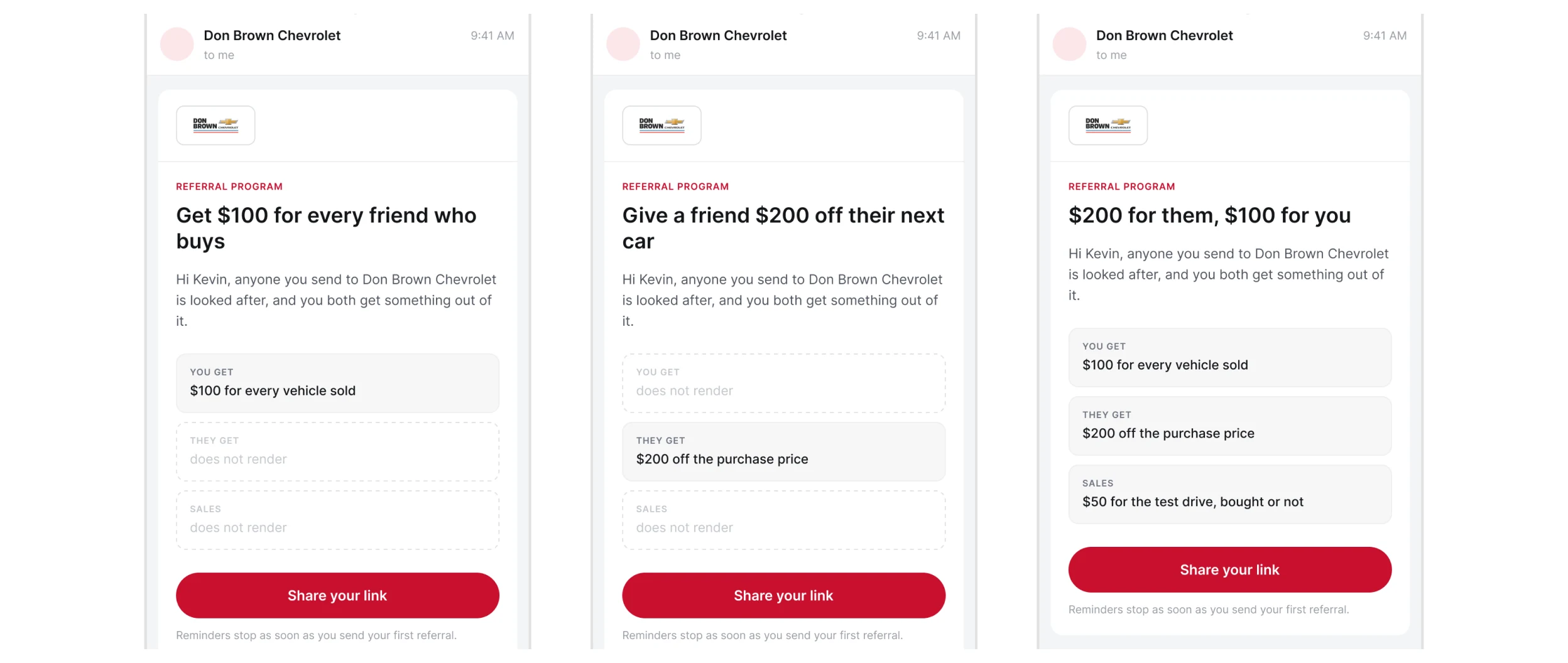
One message, three cases
The same message under three of the eight configurations: the owner rewarded, the friend rewarded, and both, with the sale carried alongside.
Message architecture
Assemble the message from the offer
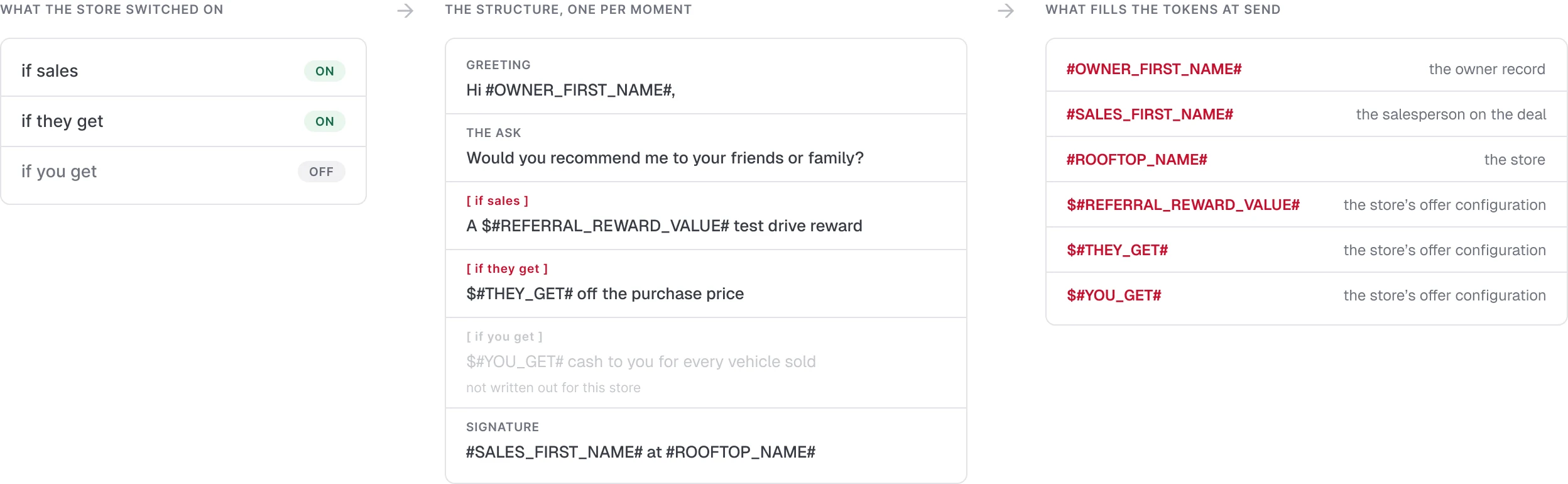
Instead of maintaining a complete copy set for every case, I built one structure for each moment. Conditional blocks determine which reward lines appear; tokens supply the dealership, salesperson, vehicle, and amounts.
The side-by-side variants show why this matters. The invitation remains recognizable, but its promise changes with the offer. Blocks that do not apply are left out.
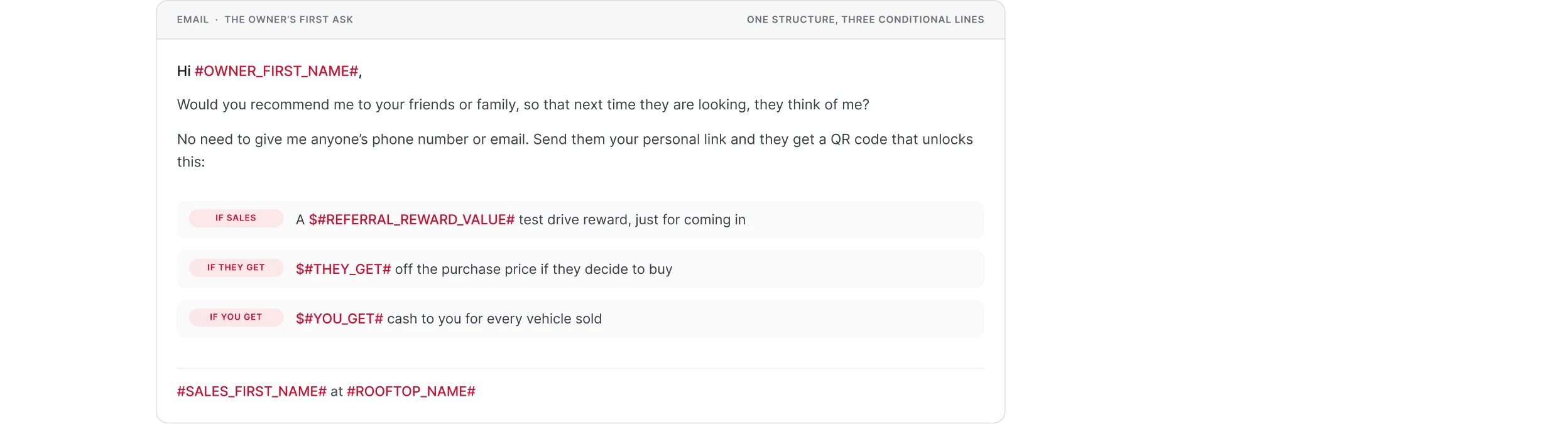
One structure, three conditions
One message structure, with reward blocks included only when they apply.
The email
Reward figures, dealership details, and names are filled at send time.
The recipient
Write for the person receiving it
The owner already knows the dealership. The friend may not. Their first message needs to explain who is contacting them, why, and what has been offered before asking them to act.
The no-reward case needs a different emphasis too. Without an incentive to lead with, the invitation rests on the relationship with the salesperson rather than implying a benefit that is not there.
Audience and offer
Audience and offer change the emphasis, not just the name at the top.

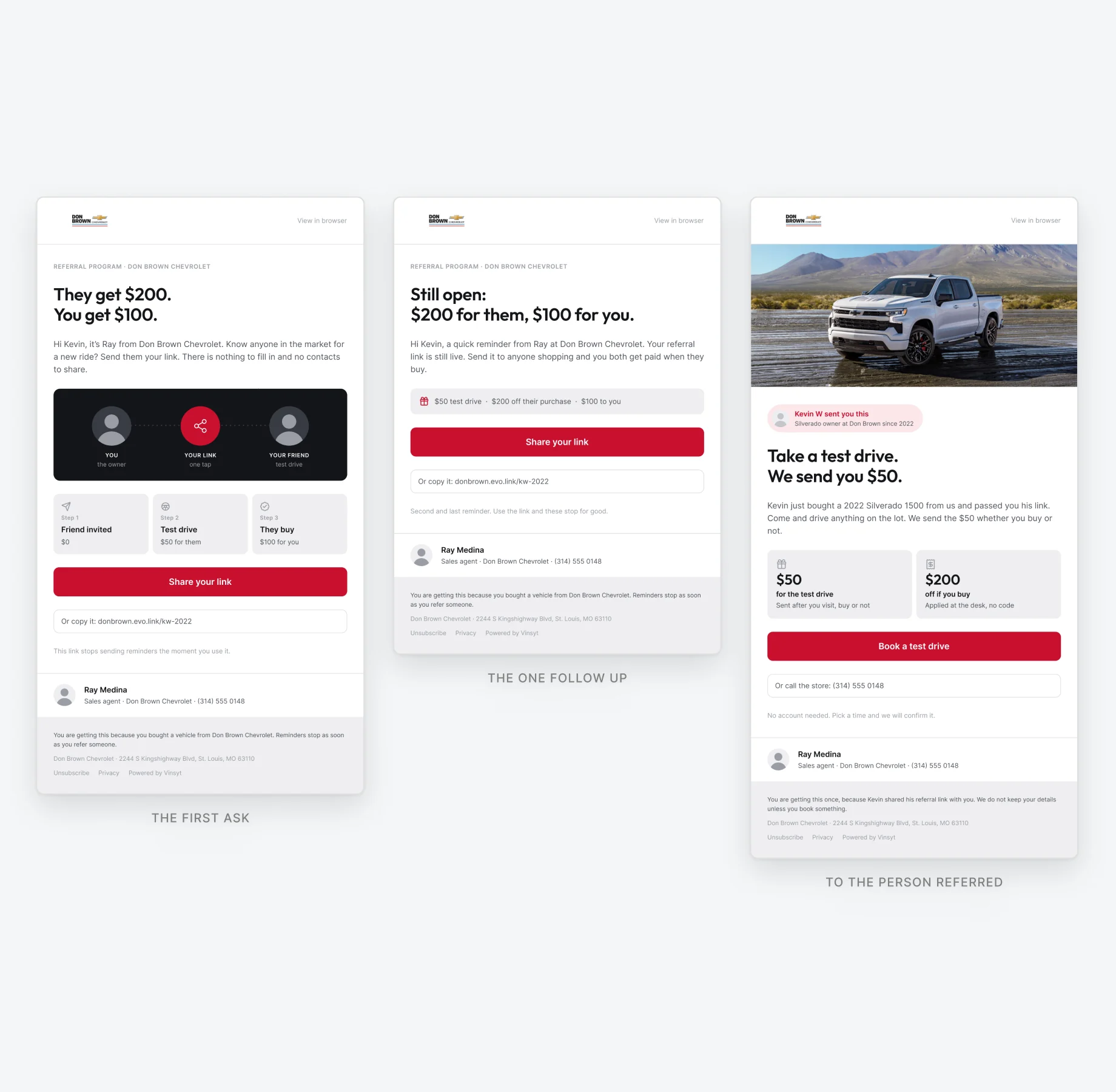
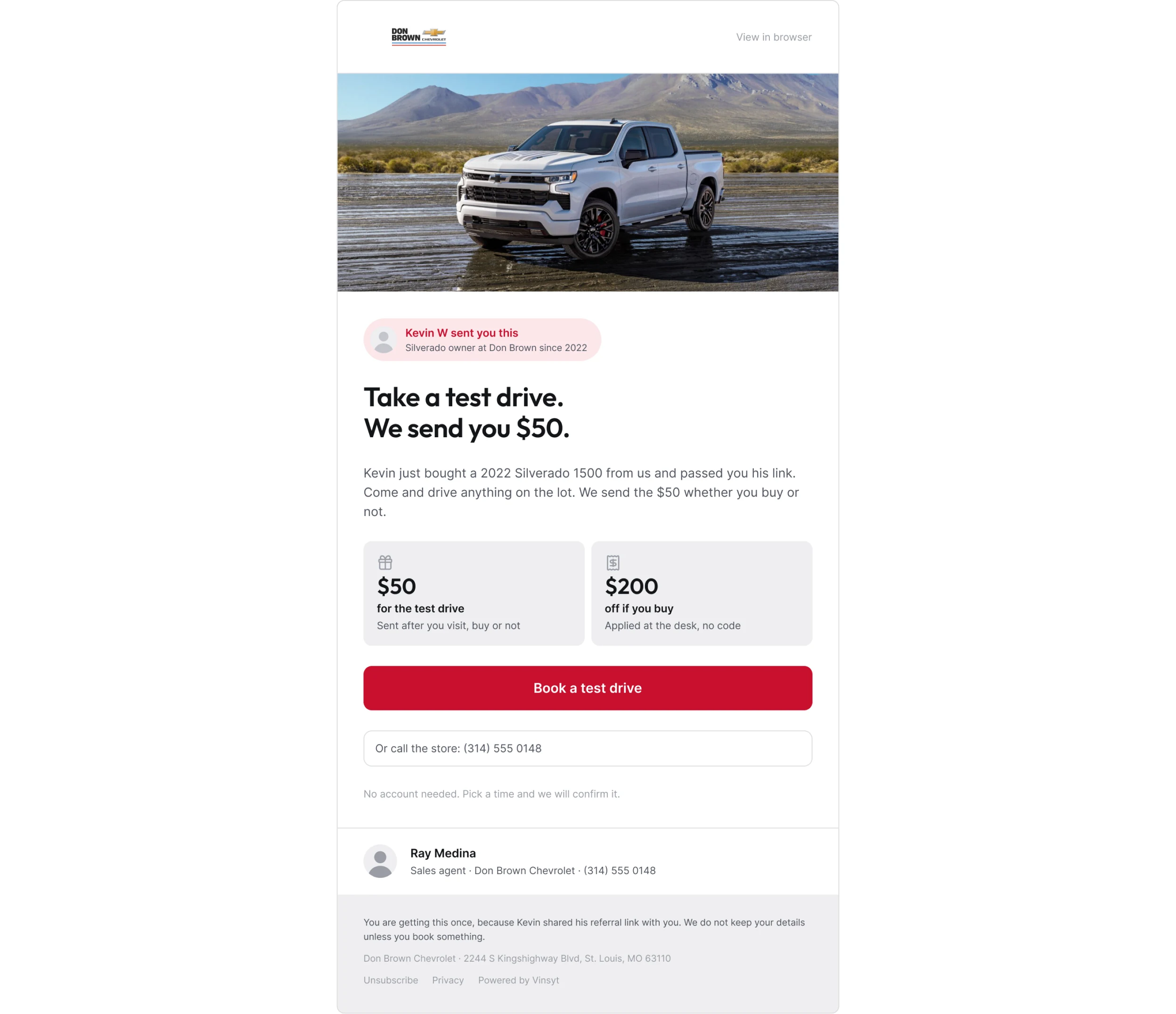
The email to the person referred
The message carries the offer into the next step.
The share path
Keep sharing deliberate
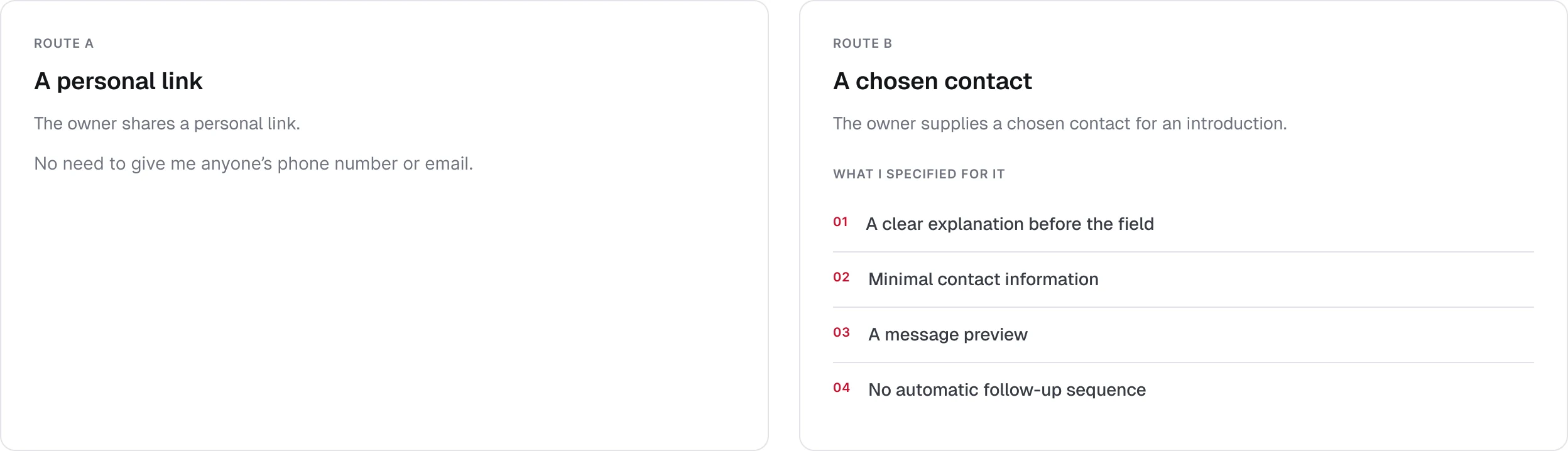
The design includes two routes: the owner shares a personal link, or supplies a chosen contact for an introduction.
Two routes out
For the direct-contact route, I specified a clear explanation before the field, minimal contact information, a message preview, and no automatic follow-up sequence for an unresponsive friend. The introduction should remain deliberate rather than quietly enrolling someone in a sequence.
The message sequence
Design the sequence as well as the individual send
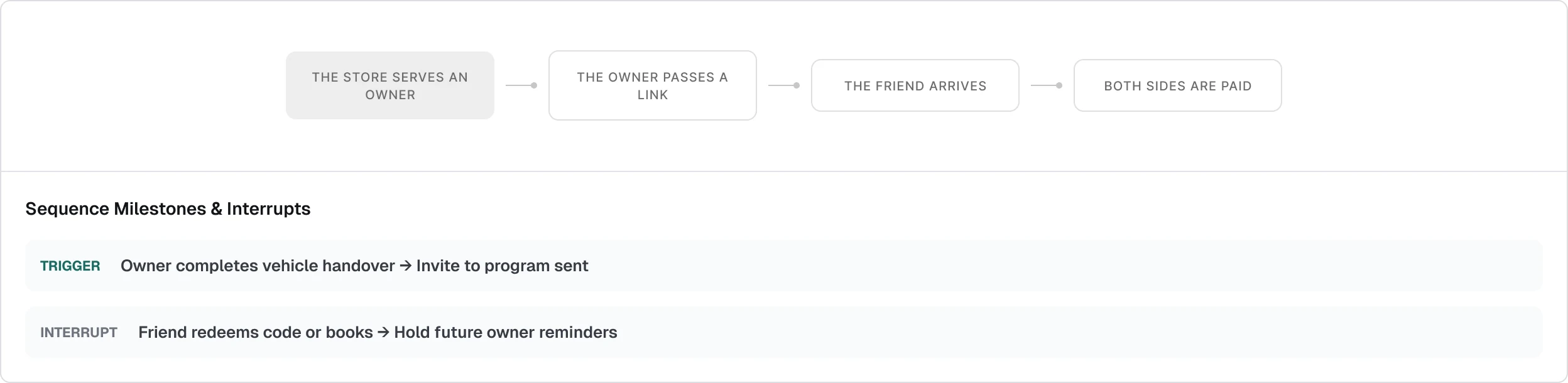
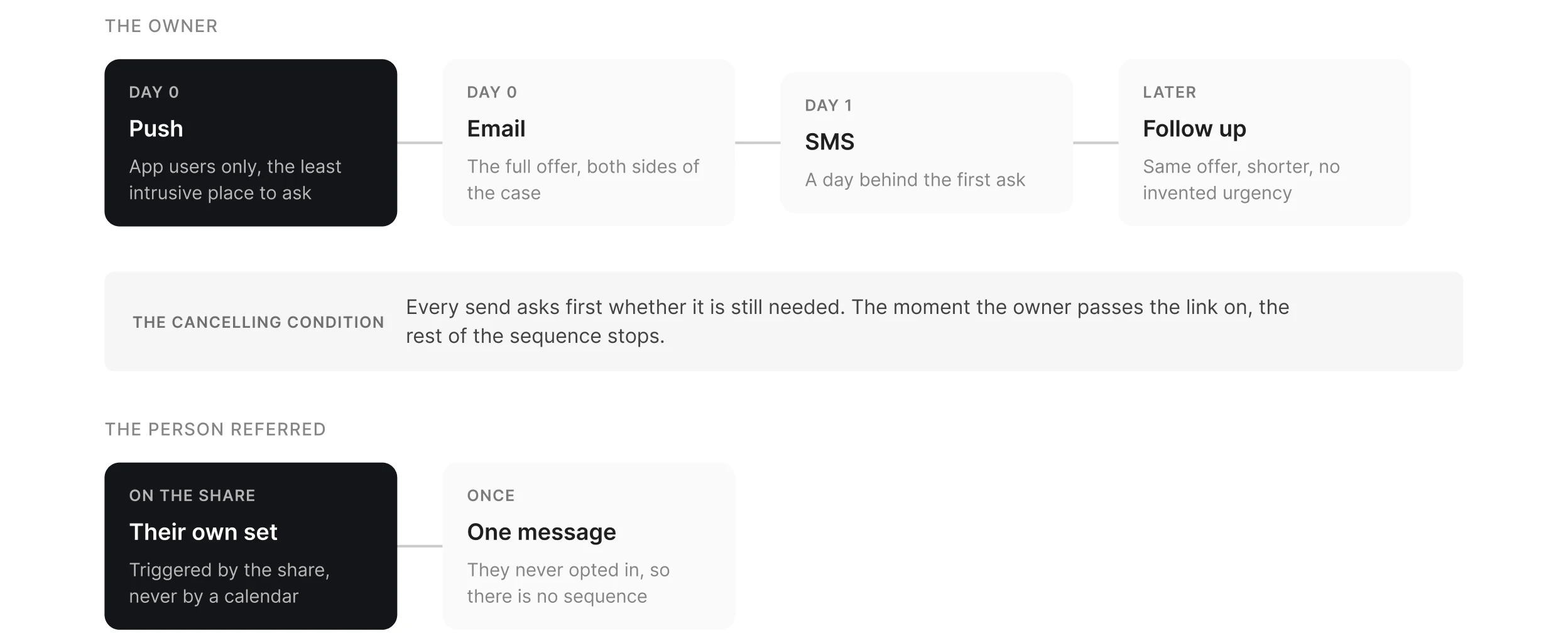
The send plan connects the invitation to a completed visit or vehicle handover, then defines the channel timing and cancellation checks. Once sharing has happened, the remaining invitation sequence should stop.
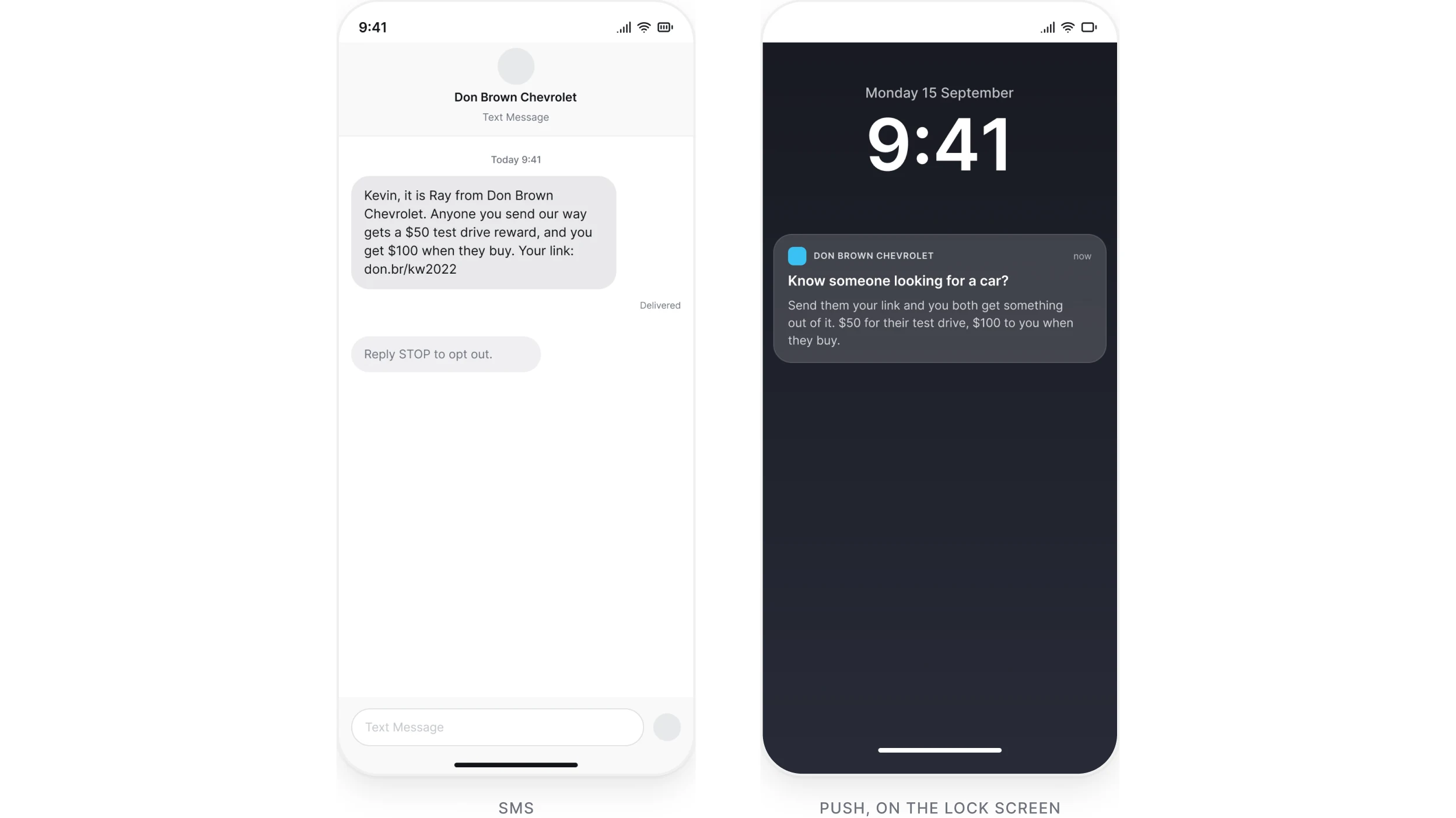
I wrote the email, SMS, and app variants as parts of that sequence rather than unrelated messages. Each needs enough context for its channel without repeating the whole program.
The send plan
Channel variants belong to one sequence, with a condition checked before sending.
SMS and app
SMS and app notifications carry the offer into their respective channels.
All three channels
The configuration view and message table support the send sequence.
Beyond the inbox
Carry the offer beyond the inbox
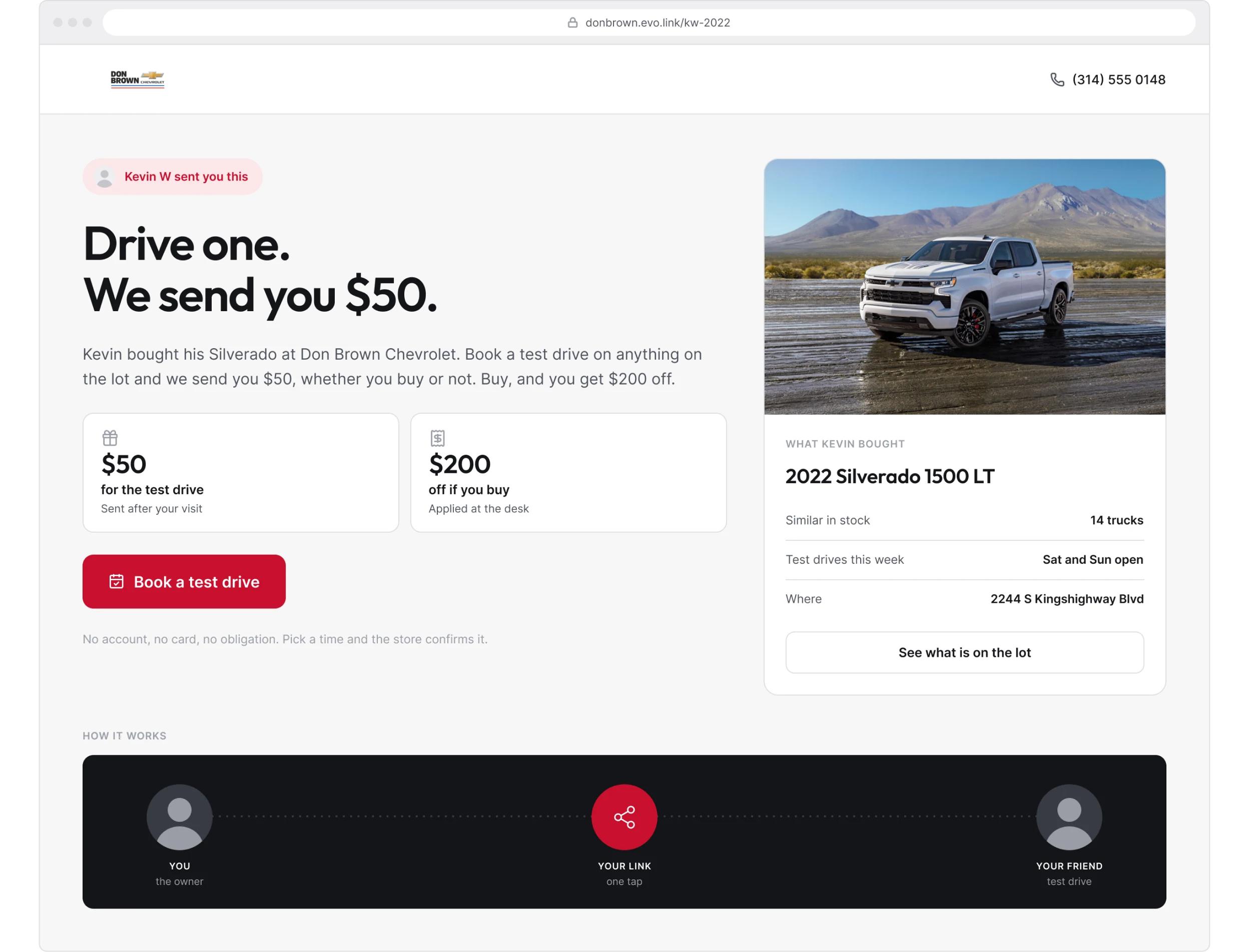
The landing and reward pages continue the same offer into the next step. The QR destination connects that digital path to redemption with an advisor at the counter.
The customer should not have to reinterpret the reward as they move from a message to a page to an in-person interaction.
The shared delivery infrastructure is covered in the Lifecycle Engine. This project focuses on the offer, the language it generates, and the path the customer follows.
The landing page
The landing-page specimen continues the referral offer.
Delivery & scope
Production system. Design specimens shown
This page documents the offer model, message system, and share-to-redemption flow. It does not report measured links shared, codes redeemed, or attributed sales.
- The shipped system carries 32 configured referral events
- 22 live share messages across email, SMS, and app notifications
- Eight offer configurations, across sales and service
- The message examples on this page are design specimens